Ohara by Logia AI
Position
Lead UX Designer
Location
Remote
Date
09/2024 - Now
Platform
Website
App(coming)
Tools
Figma
Method
Research
Feature Ideation & Prioritization
Information Architecture
Prototyping & Designing
UI Design
Collboration
Project Overview
As a UX Designer at Logia Ohara, an AI start-up, I contributed to the design of the core product and website. I collaborated with the founding team to define the product vision, conducted user research to identify user needs and pain points, and translated insights into user flows and wireframes. I then designed high-fidelity UI screens in Figma, ensuring consistency with the brand identity while maintaining usability. Working in close collaboration with developers, I iterated on components, tested interactions, and refined features through feedback loops. This hands-on process allowed me to shape both the user experience and the digital presence of Ohara from the ground up.
What is Ohara by Logia AI
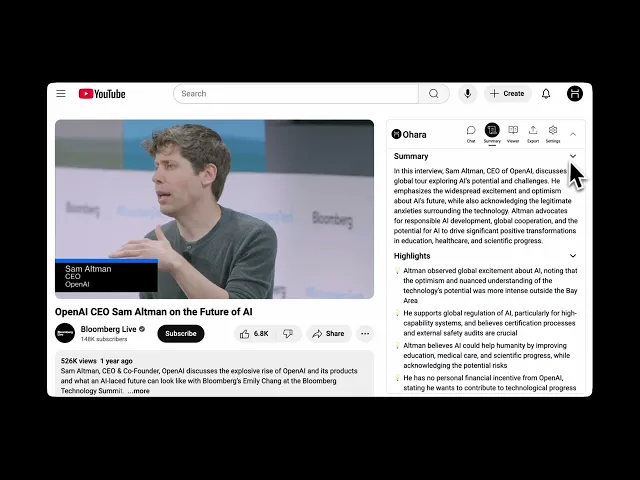
Ohara is an AI-powered tool designed to transform video content—particularly from YouTube—into an interactive learning experience. It allows users to instantly summarize videos, search transcripts, jump to key moments, export summaries for note-taking, and even chat with the video for in-depth, context-aware answers. The platform emphasizes efficiency—getting answers “10× faster” without pausing or navigating multiple tabs. Ohara serves learners, professionals, and creators by reducing friction and enabling faster comprehension and retention of video materials.
Project Goal
Streamline video-based learning: Help users extract key insights from long-form video content quickly and efficiently.
Enhance engagement & usability: Design an intuitive, user-friendly interface that makes AI-driven features like transcript search, Q&A, and summaries feel seamless.
Support product growth: Establish a credible, scalable product experience that can attract early adopters and differentiate Logia Ohara in the competitive AI learning space.
Research & Analysis
I began by conducting user research to understand how students and professionals currently interact with long-form video content and where existing tools fall short. These insights highlighted pain points around time efficiency, content navigation, and knowledge retention.
Based on these findings, I worked with the founding team to prioritize features such as transcript search, AI-powered summarization, and highlight extraction. I then created wireframes and user flows to visualize user interactions, ensuring the product balanced advanced AI functionality with a clean, approachable interface.
Once the core flows were validated, I developed high-fidelity UI designs, focusing on clarity, accessibility, and engagement. I collaborated closely with engineers, iterating on prototypes and refining components to maintain design consistency during development.
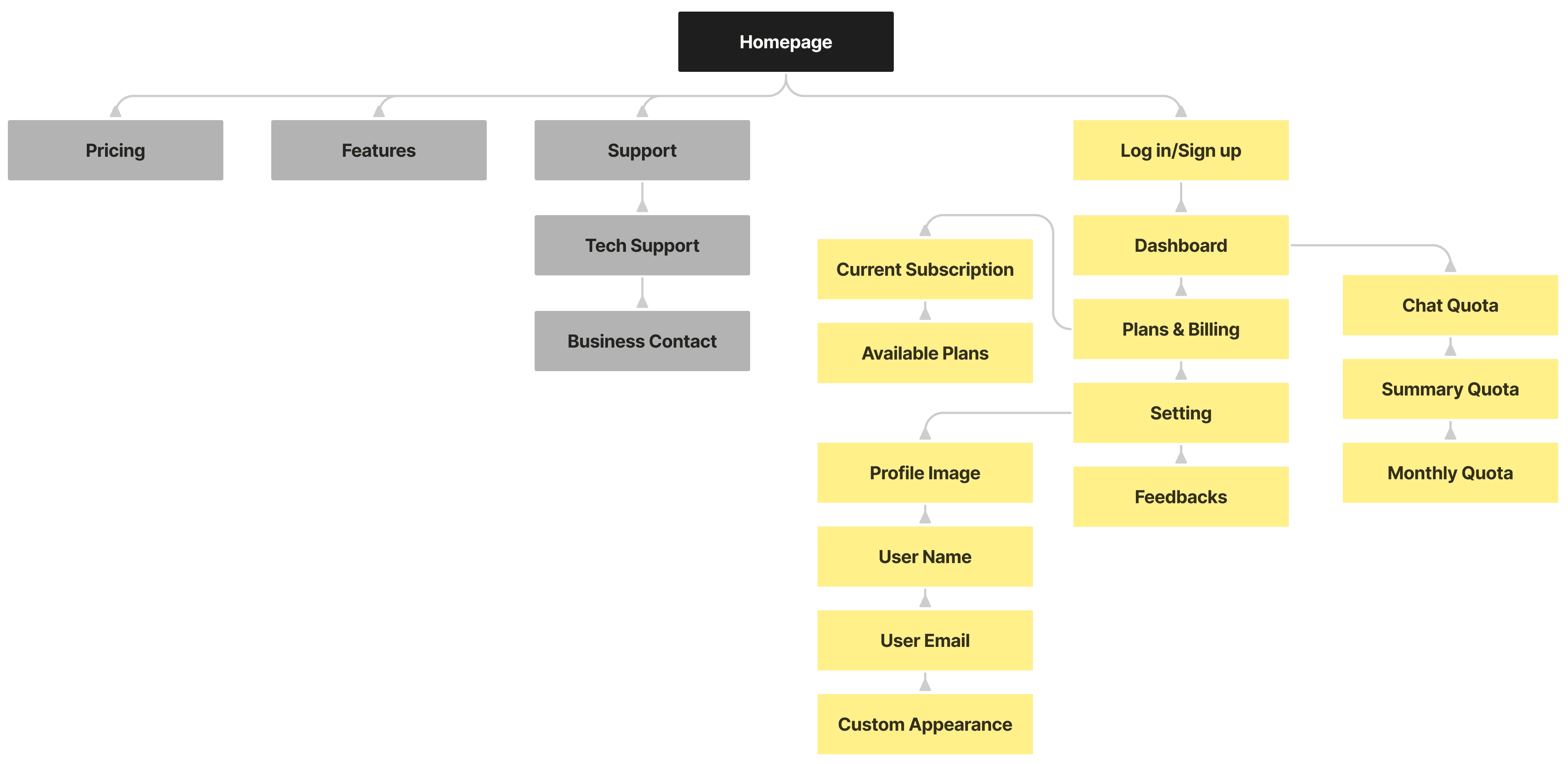
Information Architecture
UI Design
For the product interface, we wanted the design to feel natural and intuitive for users already familiar with online streaming. To achieve this, we referenced the UI patterns from YouTube livestreams, ensuring that key functions like transcripts, highlights, and summaries blended seamlessly into the viewing experience without adding cognitive load.
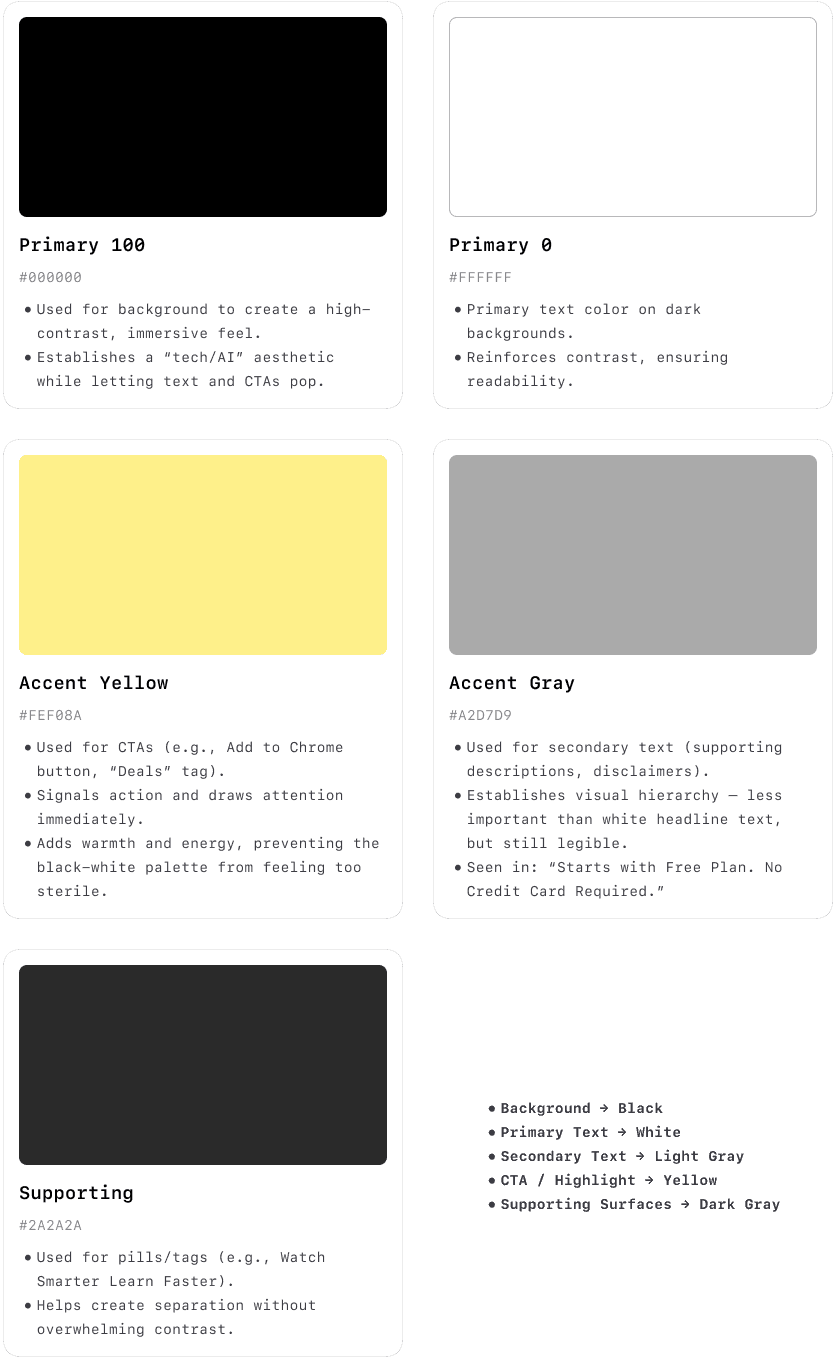
For the marketing website and dashboard, we aimed to convey a modern AI-driven aesthetic that communicates innovation and trust. To achieve this, we drew inspiration from OpenAI’s clean, minimal interface design, incorporating subtle gradients, spacious layouts, and a balance of bold and neutral tones. This approach helped align the product with contemporary AI tools while maintaining usability and professionalism.
Color
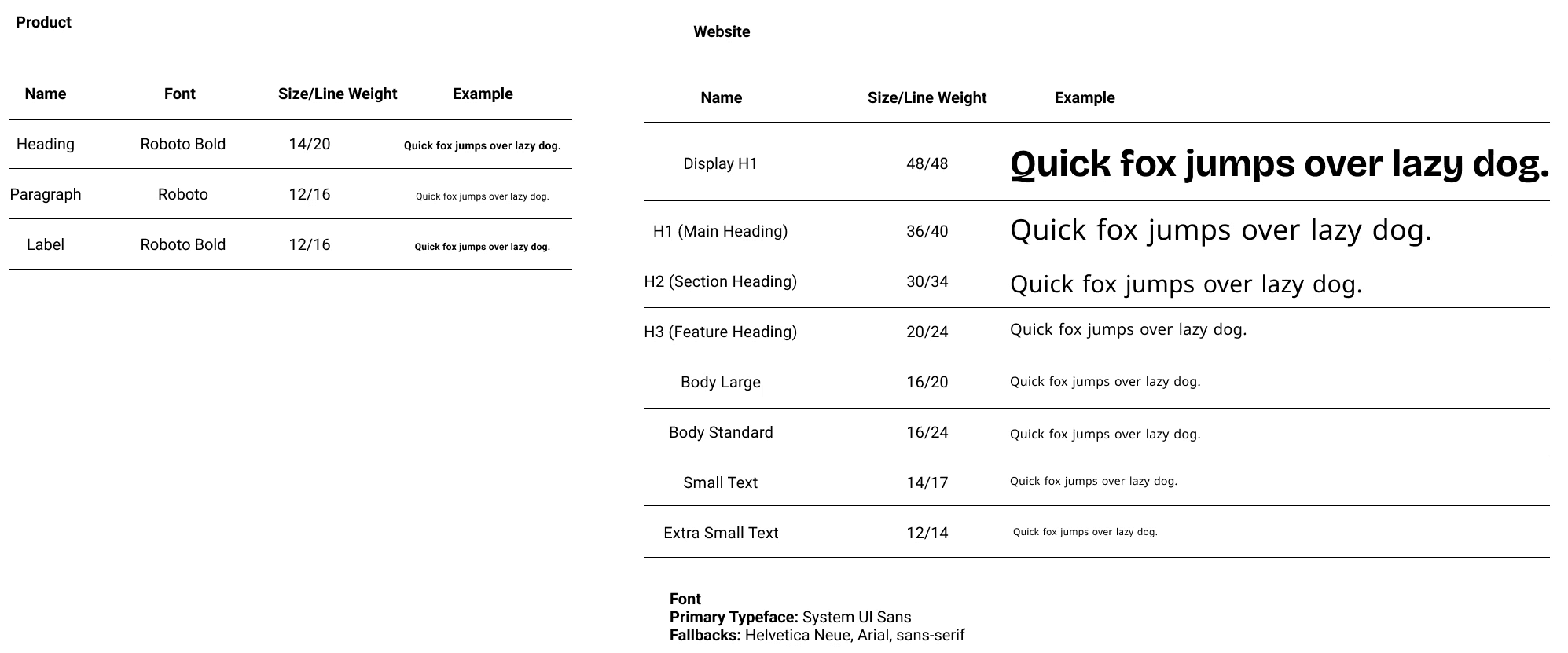
Typography
Solution
The final product is a web-based platform that enables users to quickly process long-form video content through AI-powered summarization, transcript search, and highlight extraction. By combining a streamlined interface with responsive design, the platform makes complex AI features feel accessible and intuitive.
Since launch, Ohara by Logia AI has been adopted by students, researchers, and professionals who use it to save time, boost productivity, and enhance learning. The product is now fully live and continues to evolve, supported by ongoing feedback and iterative design improvements.